
Recent investigations‚ notably by the New York Times‚ spotlight a critical oversight: digital restaurant menu accessibility. The push to examine menus stems from increasing awareness and legal scrutiny‚ demanding inclusivity for all diners.
Accessibility isn’t merely a courtesy; it’s becoming a necessity as more patrons rely on digital platforms to preview offerings before visiting establishments.
The Current Landscape of Digital Accessibility in Restaurants
Currently‚ the digital accessibility of restaurant menus is remarkably inconsistent. Many establishments still rely heavily on PDF menus‚ a format notoriously difficult for screen readers to interpret‚ creating significant barriers for visually impaired customers. The New York Times’ focus has begun to highlight this widespread issue‚ prompting a much-needed conversation about inclusivity in the dining experience.
Initial assessments reveal that a substantial percentage of restaurant websites lack fully accessible menus. Common problems include missing alternative text for images‚ poor keyboard navigation‚ and insufficient color contrast. This situation is further complicated by the rapid adoption of online ordering and delivery services‚ amplifying the impact of inaccessible menus. Recent reports indicate a growing number of accessibility checks are being performed by users with screen readers‚ revealing these deficiencies.
Why NYT Focuses on Restaurant Menu Accessibility
The New York Times’ increased attention to restaurant menu accessibility stems from a commitment to highlighting digital inclusivity and consumer rights. Their investigations reveal a systemic issue impacting a significant portion of the population‚ particularly individuals with disabilities. The newspaper recognizes that access to basic information‚ like a restaurant menu‚ shouldn’t be a barrier to participation in everyday life.
Furthermore‚ the NYT’s coverage aims to raise awareness of the legal implications for restaurants failing to comply with accessibility standards‚ such as the Americans with Disabilities Act (ADA). Recent data shows a surge in digital accessibility lawsuits‚ with restaurants being increasingly targeted. The publication views its role as informing both businesses and consumers about these evolving legal landscapes.
Ultimately‚ the New York Times believes that accessible menus are not just a matter of legal compliance‚ but a fundamental aspect of providing equitable service and fostering a more inclusive dining experience for all.

The Legal Implications of Inaccessible Menus
Inaccessible digital menus expose restaurants to ADA compliance issues and escalating lawsuits‚ potentially resulting in substantial settlement costs—ranging from $75‚000 to $400‚000—plus legal fees.
ADA Compliance and Restaurants
The Americans with Disabilities Act (ADA) mandates equal access to goods and services for individuals with disabilities‚ extending to digital experiences like restaurant menus. Restaurants‚ regardless of size‚ are legally obligated to ensure their online menus are accessible to everyone‚ including those utilizing screen readers or other assistive technologies.
PDF menus‚ a common practice‚ frequently present significant ADA compliance challenges due to inherent accessibility limitations. These formats often lack proper tagging‚ making navigation difficult for screen reader users. Failure to provide accessible alternatives constitutes a violation of the ADA‚ opening restaurants up to potential lawsuits and reputational damage.
Every restaurant must proactively address accessibility‚ viewing it not as an optional feature‚ but as a fundamental legal requirement. Compliance isn’t simply about avoiding penalties; it’s about fostering inclusivity and providing a positive dining experience for all customers. Proactive measures demonstrate a commitment to equal access and responsible business practices.
The Increase in Digital Accessibility Lawsuits (2025 Trends)
Data indicates a substantial surge in digital accessibility lawsuits targeting restaurants‚ with a projected 75% increase in 2025. This escalating trend reflects heightened awareness of ADA requirements and increased legal scrutiny of inaccessible websites and digital menus. Lawsuits commonly center around PDF menus lacking proper tagging and screen reader compatibility.
The New York Times’ focus on restaurant menu accessibility has likely contributed to this rise‚ empowering individuals with disabilities to assert their rights. Plaintiffs are increasingly filing suit over barriers preventing equal access to menu information‚ impacting their dining choices.
Experts predict this trend will continue‚ driven by evolving legal interpretations and a growing emphasis on digital inclusivity. Restaurants failing to prioritize accessibility risk significant financial and reputational consequences. Proactive remediation and ongoing monitoring are crucial to mitigate legal exposure in this evolving landscape.
Potential Settlement Costs for Non-Compliance
Restaurants facing digital accessibility lawsuits related to menus can anticipate substantial settlement costs. Current estimates place average settlements between $75‚000 and $400‚000‚ encompassing legal fees‚ remediation expenses‚ and potential damages. These figures are expected to rise as litigation becomes more prevalent and legal precedents solidify.

Beyond monetary settlements‚ restaurants may be required to undertake comprehensive accessibility audits‚ implement remediation plans‚ and provide ongoing training for staff. The New York Times’ coverage is likely influencing plaintiff demands‚ pushing for more robust and lasting accessibility improvements.
Furthermore‚ reputational damage resulting from lawsuits can significantly impact a restaurant’s brand image and customer loyalty. Proactive investment in accessibility is increasingly viewed as a cost-effective strategy compared to the financial and reputational risks associated with non-compliance and subsequent legal battles.

Common Accessibility Barriers in Restaurant Menus
PDF menus frequently lack proper tagging‚ creating significant hurdles for screen reader users‚ as highlighted by accessibility testers. Images often lack alternative text descriptions‚ further hindering access for visually impaired diners.
PDF Menus: A Major Accessibility Challenge
PDF menus‚ while seemingly convenient for maintaining visual branding‚ present substantial accessibility barriers. They are often created as image-based documents‚ rendering the text unselectable and unreadable by screen readers – essential tools for individuals with visual impairments. This fundamentally excludes a significant portion of the potential customer base.
The inherent structure of PDFs frequently lacks the semantic tagging necessary for assistive technologies to interpret the content correctly. Headings‚ lists‚ and tables aren’t automatically recognized‚ forcing screen reader users to navigate a linear‚ often confusing‚ stream of text.
Furthermore‚ many restaurants fail to provide accessible PDF alternatives‚ violating ADA guidelines. Simply scanning a paper menu into PDF format doesn’t guarantee accessibility; proper remediation is crucial‚ requiring specialized software and expertise. This oversight is a primary driver behind the increasing number of digital accessibility lawsuits targeting restaurants.
Screen Reader Incompatibility
Screen readers struggle to decipher image-based menus‚ effectively presenting a blank slate to the user. Even with text-based PDFs‚ a lack of proper tagging means headings‚ lists‚ and other structural elements are ignored‚ resulting in a disjointed and frustrating experience.
This incompatibility extends to interactive elements like online ordering systems integrated within menus. Without appropriate ARIA attributes‚ these features remain inaccessible‚ preventing users from independently browsing and selecting items.

Consequently‚ individuals relying on screen readers are often unable to access basic menu information‚ hindering their ability to dine independently and enjoy the same experience as sighted customers.
Lack of Alternative Text for Images
Restaurant menus frequently incorporate images – enticing photos of dishes‚ logos‚ or decorative elements. However‚ a pervasive accessibility barrier arises from the consistent omission of alternative text (“alt text”) for these images. Alt text serves as a textual description read aloud by screen readers‚ conveying the image’s content to visually impaired users.
Without descriptive alt text‚ these images become meaningless to individuals relying on assistive technology. A beautiful photograph of a signature dish offers no information‚ and a restaurant’s logo remains unrecognized. This exclusion creates a significant gap in the dining experience.
Effective alt text should be concise yet informative‚ accurately representing the image’s purpose and context. Decorative images can be designated with null alt text (alt=””) to signal their non-essential nature to screen readers.
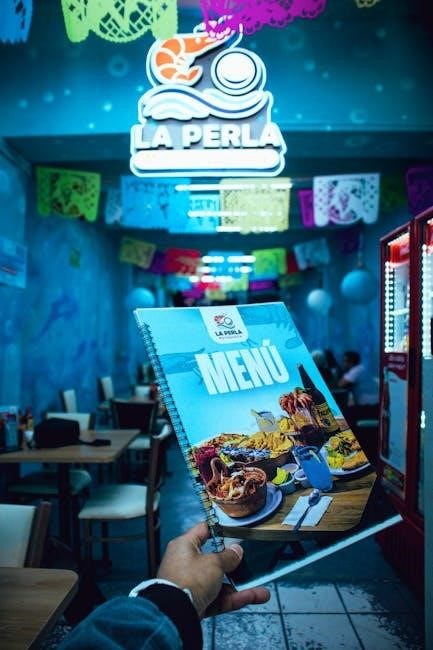
The absence of alt text isn’t simply a technical oversight; it’s a failure to provide equal access to information‚ effectively excluding a segment of the population from fully participating in the dining experience.

WCAG Guidelines and Restaurant Menus
Adhering to the Web Content Accessibility Guidelines (WCAG) is paramount for inclusive digital menus; levels A‚ AA‚ and AAA define compliance‚ with AA being the recommended standard.
Understanding WCAG Compliance Levels (A‚ AA‚ AAA)
WCAG (Web Content Accessibility Guidelines) establishes a tiered system for evaluating web accessibility‚ offering three levels of conformance: A‚ AA‚ and AAA. Level A represents the most basic level‚ addressing fundamental accessibility issues. Meeting these criteria ensures content is generally perceivable and usable for many individuals with disabilities.
Level AA‚ the commonly accepted standard‚ builds upon Level A‚ incorporating more comprehensive guidelines. This level addresses a broader range of disabilities‚ including cognitive‚ linguistic‚ and learning impairments. Achieving AA compliance significantly enhances accessibility for a substantial portion of the population.
Finally‚ Level AAA represents the highest level of accessibility‚ offering the most inclusive experience. While striving for AAA is commendable‚ it can be challenging and may not always be practical for all content. Restaurants aiming for robust accessibility should prioritize achieving Level AA compliance as a foundational step.
These tiers provide a measurable framework‚ enabling restaurants to systematically improve their digital menu accessibility and demonstrate commitment to inclusivity.
WCAG 2.1 Level AA: The Recommended Standard
WCAG 2.1 Level AA is widely recognized as the optimal balance between accessibility and implementation feasibility for digital content‚ including restaurant menus. This standard ensures a substantial level of inclusivity‚ catering to a broad spectrum of users with disabilities. It’s the benchmark many legal interpretations of accessibility‚ like those related to the ADA‚ reference.

Specifically‚ Level AA requires adherence to success criteria covering perceivability‚ operability‚ understandability‚ and robustness. This encompasses providing text alternatives for non-text content‚ ensuring keyboard accessibility‚ making content readable and predictable‚ and maximizing compatibility with assistive technologies.
For restaurants‚ achieving Level AA means menus are usable by individuals utilizing screen readers‚ keyboard navigation‚ and other assistive tools. It’s a proactive step towards avoiding potential lawsuits and fostering a positive customer experience for everyone. Prioritizing this level demonstrates a genuine commitment to digital inclusion.
Adopting WCAG 2.1 Level AA isn’t just about compliance; it’s about expanding your customer base and building a more welcoming environment.
Applying WCAG to Digital Menu Design
Image accessibility is crucial; every image‚ including food photos‚ needs descriptive alternative text (alt attributes). Ensure sufficient color contrast between text and background for readability. Keyboard navigation must be fully functional‚ allowing users to access all menu items without a mouse.
Avoid using PDFs as the primary menu format‚ as they often present significant accessibility barriers. If PDFs are unavoidable‚ utilize accessible PDF creation tools to tag content correctly. Regularly test your menus with assistive technologies to identify and rectify any issues.
Remember‚ accessibility is an ongoing process‚ not a one-time fix. Continuous monitoring and improvement are essential to maintain compliance and provide an inclusive dining experience.

Solutions for Accessible Restaurant Menus
AI-Powered Menus and Inclusivity
Artificial intelligence is rapidly transforming restaurant menu accessibility‚ offering dynamic solutions beyond traditional static formats. AI menus aren’t simply digital replicas; they actively enhance inclusivity by catering to diverse dietary needs and preferences. These systems can instantly filter menus based on allergies‚ intolerances‚ or lifestyle choices – vegan‚ gluten-free‚ or low-sodium‚ for example.
Furthermore‚ AI facilitates real-time translation‚ breaking down language barriers for international diners. Voice-activated menu navigation provides an alternative for visually impaired customers‚ while descriptive text generated by AI ensures screen readers accurately convey menu details. The New York Times’ focus on accessibility highlights the potential of these technologies to create a truly welcoming dining experience for everyone.
Beyond individual needs‚ AI can personalize menu recommendations‚ improving customer satisfaction and driving business. This technology is driving a revolution‚ making restaurants more accessible and inclusive than ever before.
Crucially‚ menus must be keyboard navigable‚ allowing users without a mouse to easily browse options. Color contrast should meet WCAG guidelines‚ ensuring readability for individuals with low vision. Clear and concise language‚ avoiding jargon‚ further enhances comprehension. The New York Times’ emphasis on accessibility underscores the importance of these foundational web development practices.
Implementing these techniques transforms a simple online menu into a welcoming and usable resource for all potential customers‚ demonstrating a commitment to equal access and a positive dining experience.
Utilizing Accessible PDF Creation Tools
The New York Times’ focus on menu accessibility highlights the need to go beyond simple scans. Automated accessibility checkers can identify potential issues‚ but manual review is essential. Ensuring proper document structure‚ logical tab order‚ and sufficient color contrast are key. Remember‚ even “tagged” PDFs require thorough testing with assistive technologies.

The Future of Restaurant Menu Accessibility
Looking ahead to 2025‚ digital menus will prioritize inclusivity‚ aligning with WCAG 2.1 Level AA standards‚ enhancing customer experience and minimizing legal vulnerabilities.
2025 Updates and Digital Menu Standards
The year 2025 marks a pivotal shift in digital menu standards for restaurants‚ driven by evolving accessibility guidelines and increasing legal pressures. Updates focus on creating truly inclusive experiences‚ moving beyond simply having an online menu to ensuring it’s usable by everyone‚ including individuals with disabilities.
These forthcoming standards heavily emphasize alignment with the Web Content Accessibility Guidelines (WCAG) 2.1 Level AA‚ a globally recognized benchmark for web accessibility. Restaurants are proactively encouraged to adopt these guidelines to mitigate potential legal risks and demonstrate a commitment to inclusivity. The New York Times’ focus on this issue has further amplified the need for change.
Key updates include requirements for proper alternative text for images‚ ensuring screen reader compatibility‚ and providing clear‚ navigable menu structures. The goal is to make digital menus as accessible and user-friendly as their physical counterparts‚ fostering a more welcoming dining experience for all customers.
The Impact of Digital Menus on Customer Experience
Digital menus have fundamentally reshaped the customer journey‚ with a significant 76% of diners now consulting online menus before choosing a restaurant. This pre-visit research profoundly impacts decision-making‚ making accessibility a crucial element of the overall experience. An inaccessible menu immediately creates a barrier‚ potentially losing customers before they even enter the door.
Beyond convenience‚ accessible digital menus demonstrate a restaurant’s commitment to inclusivity‚ fostering positive brand perception and loyalty. Customers with disabilities‚ and their families and friends‚ are more likely to patronize establishments that prioritize their needs. The New York Times’ coverage highlights this growing expectation for equitable access.
Conversely‚ a frustrating or unusable digital menu can lead to negative reviews and lost business. Investing in accessibility isn’t just about compliance; it’s about enhancing the customer experience for all patrons‚ creating a welcoming and enjoyable dining environment.
The Role of Technology in Enhancing Accessibility
Technology is rapidly becoming the cornerstone of accessible restaurant menu design. AI-powered menus‚ as highlighted in recent reports‚ are emerging as a powerful tool‚ capable of adapting to diverse dietary needs and preferences‚ and ensuring inclusivity for all customers. These systems can dynamically adjust content based on user profiles and accessibility settings.
The 2025 updates to digital menu standards emphasize alignment with WCAG 2.1 Level AA guidelines‚ driving the adoption of these technologies. The New York Times’ focus on this issue is accelerating the demand for innovative solutions that prioritize accessibility and enhance the dining experience for everyone.