Panasonic Bread Machine Manual: A Comprehensive Guide
Panasonic is restructuring, transferring electric works and tools to Makita (March 31, 2026), while innovating with AI and eco-friendly appliances like Ecocute (March 25, 2026).
Panasonic bread machines represent a long-standing commitment to innovative kitchen appliances, consistently delivering quality and convenience to bakers of all skill levels. Recent corporate shifts within Panasonic (April 1, 2026) see a restructuring of business units, but the dedication to home appliances remains strong.
These machines are renowned for their consistent results, user-friendly interfaces, and a wide range of programmable settings. Panasonic’s focus on technology is evident, with potential future integration into smart home ecosystems. The company’s commitment to sustainability is also reflected in energy-efficient designs.
From basic loaves to specialty breads, Panasonic machines simplify the baking process, offering a reliable and efficient way to enjoy fresh, homemade bread. The launch of new products like the Ecocute (March 25, 2026) demonstrates Panasonic’s continued innovation.
Understanding Your Model Number
Your Panasonic bread machine’s model number is crucial for accessing specific support and documentation. With Panasonic undergoing corporate changes (April 1, 2026, and March 31, 2026, regarding Makita), identifying your model ensures you receive assistance from the correct channels.
The model number is typically located on a sticker on the bottom or back of the machine. It often includes a series of letters and numbers that denote the machine’s features, manufacturing date, and regional market.
This information is essential when contacting customer support, downloading recipes, or ordering replacement parts. Panasonic’s recent focus on innovation, like the Ecocute (March 25, 2026), means models are constantly evolving, making accurate identification vital. Refer to your manual or Panasonic’s website using your model number.
Key Components and Parts Identification
Understanding your Panasonic bread machine’s components is vital for operation and maintenance. Key parts include the bread pan, kneading paddle, heating element, and control panel. The bread pan securely holds ingredients during baking, while the paddle mixes and kneads the dough.
Panasonic’s recent innovations (like the Ecocute, March 25, 2026) demonstrate their commitment to quality components. The heating element ensures even baking, and the control panel allows you to select desired settings.
Familiarize yourself with the lid, sensor, and any included measuring cups or spoons. Given Panasonic’s restructuring (March 31, 2026, with Makita), knowing your model’s specific parts will aid in future support requests.
Getting Started with Your Bread Machine
Panasonic’s 2026 focus on technology, including AI and smart home integration, suggests future machines will be user-friendly and efficient for baking.
Initial Setup and First-Time Use
Before your first loaf, unpack the bread machine and remove all packaging materials. Carefully inspect the bread pan and kneading paddle for any shipping damage. Wash both components with warm, soapy water, ensuring a thorough rinse and complete drying before use.
Place the machine on a stable, level surface, away from water sources. Plug it into a grounded electrical outlet. It’s crucial to understand Panasonic’s recent corporate shifts (April 1, 2026) as support channels may evolve.
Perform a test run without ingredients. Select a basic cycle and let it run through completion. This helps burn off any manufacturing residue and familiarizes you with the machine’s operation. Note the potential for smart home integration, aligning with Panasonic’s tech advancements (2025/2026).
Control Panel Overview and Functions
The control panel features a digital display and several buttons for cycle selection, crust color adjustment, and timer settings. Familiarize yourself with each button’s function before operation. Panasonic’s focus on innovation (seen in their new Technology CUBE – Feb 4, 2026) suggests potential for future software updates impacting panel functionality.
Key buttons include ‘Start/Stop’, ‘Menu’ for cycle browsing, ‘Crust Color’ for light to dark settings, and ‘Timer’ for delayed baking. The display indicates the current cycle stage – kneading, rising, baking, and keep-warm.
Remember Panasonic’s restructuring (March 31, 2026) may influence support resources for understanding these functions. Explore the manual thoroughly, and consider online resources for visual guides. The panel’s responsiveness is crucial for optimal bread making.
Understanding the Display Indicators
The display panel utilizes various indicators to communicate the bread machine’s status. A flashing ‘Knead’ icon signifies the kneading process, while ‘Rise’ indicates proofing. During baking, the ‘Bake’ indicator illuminates, and ‘Keep Warm’ activates post-baking. Panasonic’s advancements in AI (Feb 4, 2026) may lead to more sophisticated indicators in future models.
Error codes are displayed to alert you to issues – consult the manual for specific meanings. A timer display shows remaining baking time, and a crust color indicator displays your selected preference. Panasonic’s restructuring (March 31, 2026) might affect access to detailed support for interpreting these codes.
Pay close attention to these indicators for successful baking. Understanding them prevents errors and ensures optimal results.
Basic Bread Making Recipes
Panasonic’s 2026 innovations, including Ecocute (March 25th) and smart home integration, don’t impact core recipes; enjoy classic loaves with ease!
Basic White Bread Recipe
Yields: 1 standard loaf (approximately 1.5 lbs)
Prep time: 10 minutes
Cook time: 3 hours 30 minutes (including rise time)
Ingredients:
- 3 cups (360g) bread flour
- 1 ¼ cups (300ml) warm water (105-115°F / 40-46°C)
- 2 tablespoons (30g) granulated sugar
- 1 ½ teaspoons (6g) salt
- 2 ¼ teaspoons (7g) active dry yeast
- 2 tablespoons (30ml) vegetable oil
Instructions:
- Add ingredients to the bread machine pan in the order listed above.
- Select the “Basic” or “White Bread” cycle on your Panasonic machine.
- Choose crust color (light, medium, or dark).
- Press “Start.”
- Once the cycle is complete, carefully remove the loaf from the pan and let cool on a wire rack before slicing and enjoying.
Whole Wheat Bread Recipe
Yields: 1 standard loaf (approximately 1.5 lbs)
Prep time: 15 minutes
Cook time: 3 hours 45 minutes (including rise time)
- 1 ½ cups (180g) whole wheat flour
- 1 ½ cups (180g) bread flour
- 1 ¼ cups (300ml) warm water (105-115°F / 40-46°C)
- 2 tablespoons (30g) honey or maple syrup
- 1 ½ teaspoons (6g) salt
- 2 ¼ teaspoons (7g) active dry yeast
- 2 tablespoons (30ml) vegetable oil
- Combine ingredients in the bread machine pan, ensuring yeast doesn’t touch liquid initially.
- Select the “Whole Wheat” cycle on your Panasonic bread machine.
- Choose your desired crust color.
- Press “Start” and allow the machine to work its magic.
- Remove the loaf once cooled, and enjoy a hearty, wholesome bread.
Sweet Bread Recipe
Yields: 1 standard loaf (approximately 1.5 lbs)
Prep time: 20 minutes
Cook time: 3 hours 30 minutes (including rise time)
- 1 ½ cups (192g) bread flour
- ¼ cup (30g) granulated sugar
- 1 teaspoon (5g) salt
- 1 ¼ cups (300ml) milk, warmed
- 2 tablespoons (30g) butter, softened
- 2 ¼ teaspoons (7g) active dry yeast
- 1 egg
- ½ teaspoon vanilla extract
- Combine all ingredients in the Panasonic bread machine pan.
- Select the “Sweet” cycle on your machine.
- Choose your preferred crust color setting.
- Press “Start” and let the machine handle the kneading and baking.
- Remove the loaf and enjoy warm with butter or your favorite spread.
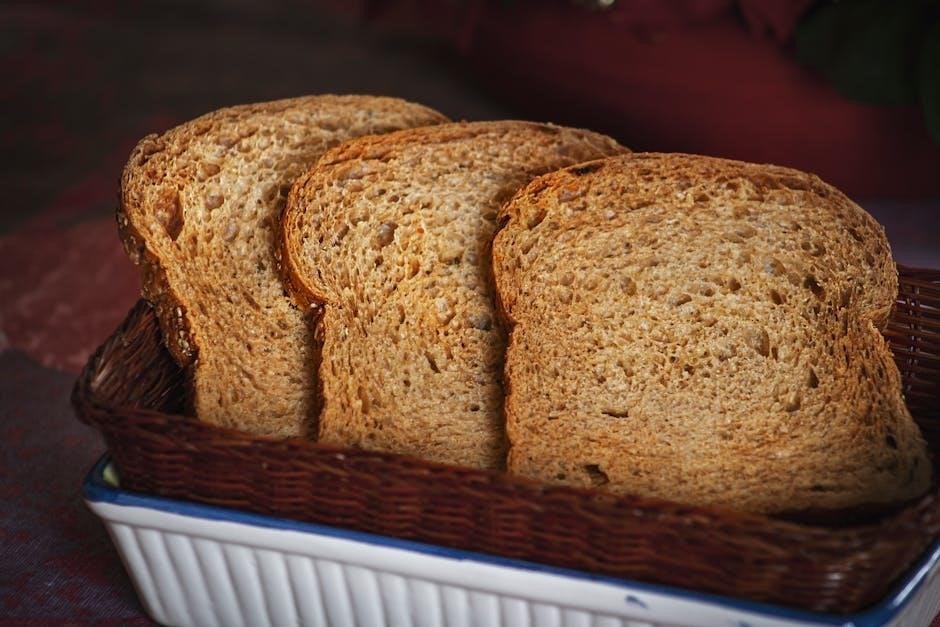
Advanced Bread Making Techniques
Panasonic’s 2026 innovations, including AI integration and Ecocute technology (March 25, 2026), inspire experimentation with diverse flours and flavorful additions.
Using Different Flour Types
Panasonic’s commitment to innovation, highlighted by their 2026 advancements in AI and eco-friendly appliances like the Ecocute (March 25, 2026), encourages exploration in bread making. Beyond standard bread flour, experiment with whole wheat, rye, spelt, or even gluten-free blends.
Each flour impacts texture and rise. Whole wheat adds a nutty flavor and denser crumb. Rye requires adjustments to liquid levels. Spelt offers a slightly sweet taste. Gluten-free flours necessitate xanthan gum for structure.
Consult your Panasonic bread machine manual for specific flour recommendations and adjustments to settings. Start with substituting 25-50% of bread flour with another type, observing the results. Remember Panasonic’s focus on technology (Feb 4, 2026) can aid in precise ingredient measurements for optimal outcomes.
Adding Fruits, Nuts, and Seeds
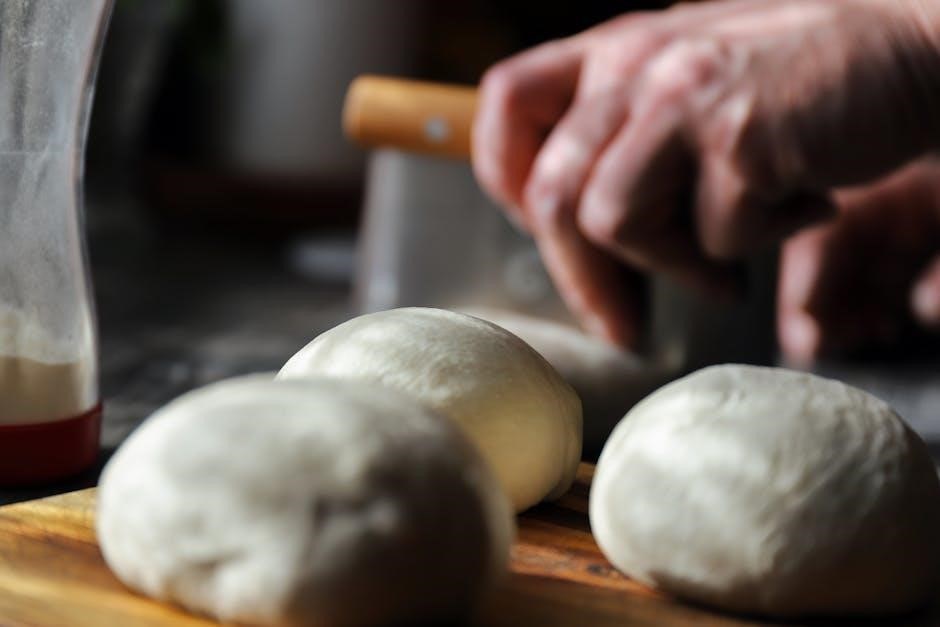
Panasonic’s dedication to enhancing home life, evidenced by their new Technology CUBE research hub (Feb 4, 2026), extends to enriching bread flavors. Adding fruits, nuts, and seeds elevates your loaves. Dried fruits like raisins or cranberries add sweetness and chewiness. Nuts provide texture and healthy fats. Seeds offer nutritional benefits and a subtle crunch.
Introduce these ingredients during the second kneading cycle, using the dispenser if your Panasonic model has one. Avoid overloading the machine; generally, ½ to 1 cup of total additions is sufficient.
Consider the moisture content – dried fruits may require a slight liquid reduction. Panasonic’s focus on precision (Sep 22, 2025) suggests accurate measurements are key for consistent results.
Adjusting Dough Consistency
Panasonic’s commitment to innovation, highlighted by their Ecocute full model change (March 25, 2026), translates to adaptable bread making. Dough consistency is crucial for optimal results. If the dough is too wet, gradually add 1 tablespoon of flour at a time during kneading. Conversely, if it’s too dry, add 1 teaspoon of water.
Observe the dough’s texture – it should form a smooth, elastic ball. Humidity and flour type impact consistency. Panasonic’s new Technology CUBE (Feb 4, 2026) likely focuses on understanding these variables.
Remember, slight adjustments are best. Over-adjusting can negatively affect the final loaf. Trust your instincts and refer to the recipe guidelines.

Troubleshooting Common Issues
Panasonic’s restructuring (April 1, 2026) may affect support, but common issues include power failures or kneading problems; check connections and dough consistency.
Bread Machine Not Turning On
If your Panasonic bread machine fails to power on, several checks are essential. First, verify the power cord is securely connected to both the machine and a functioning wall outlet. Test the outlet with another appliance to confirm it’s delivering power.
Next, examine the power button itself; ensure it’s fully engaged. Consider if a recent Panasonic corporate restructuring (April 1, 2026) might impact support resources. If the machine still doesn’t respond, check the internal fuse (consult your model’s specific manual for location and replacement instructions).
A tripped circuit breaker could also be the culprit, so check your home’s electrical panel; Finally, if none of these steps resolve the issue, contacting Panasonic support, acknowledging potential changes due to the Makita transfer (March 31, 2026), is recommended.
Kneading Problems and Solutions
If your Panasonic bread machine’s kneading cycle isn’t functioning correctly, begin by ensuring you’ve used the correct amount of liquid for your recipe. Too much liquid results in a sticky dough, while too little creates a dry, crumbly mixture. Verify the paddle is securely attached; a loose paddle won’t knead effectively.
Check the dough consistency mid-cycle. If it’s excessively wet, add flour, one tablespoon at a time. If it’s too dry, add water, also one tablespoon at a time. Remember Panasonic’s focus on innovation (Feb 25, 2026) may mean newer models have adjusted kneading algorithms.
Consider the flour type; high-gluten flours require less kneading. If issues persist, consult the manual or Panasonic support, keeping in mind potential support changes due to the Electric Works/Makita transfer (March 31, 2026).
Bread Collapsing or Not Rising
If your bread collapses or doesn’t rise properly in your Panasonic bread machine, several factors could be at play. Ensure your yeast is fresh and activated correctly; expired yeast is a common culprit. Check the ambient temperature – cold temperatures can inhibit yeast activity.
Excessive liquid or fat can also weaken the dough structure, leading to collapse. Conversely, too much flour can prevent proper rising. Panasonic’s new Technology CUBE (Feb 4, 2026) suggests potential advancements in temperature control, so ensure your machine is functioning optimally.
Avoid opening the lid during baking, as this releases heat and can cause the bread to fall. Remember, corporate restructuring (March 31, 2026) might affect support resources, so consult the manual first.
Maintenance and Cleaning
Regular cleaning ensures longevity; Panasonic’s focus on sustainability (recent news, 2025/2026) aligns with proper care of your appliance for years of use.
Cleaning the Bread Pan and Paddle
Thorough cleaning of the bread pan and paddle is crucial after each use to prevent residue buildup and maintain optimal performance. Always unplug the bread machine and allow both components to cool completely before handling. Remove the paddle first, then carefully lift out the bread pan.
Wash both the pan and paddle in warm, soapy water. Avoid using abrasive cleaners or scouring pads, as these can damage the non-stick coating. For stubborn residue, soak the pan and paddle in warm water for 15-20 minutes before washing. Ensure all soap residue is rinsed away completely.
Panasonic’s commitment to sustainability (as seen in recent news, 2025/2026) encourages mindful cleaning practices. Dry both components thoroughly before reassembling and storing. Some models may have dishwasher-safe parts – consult your specific model’s manual for confirmation.
Exterior Cleaning and Care
Maintaining the exterior of your Panasonic bread machine is simple and ensures its longevity. Always unplug the machine and allow it to cool before cleaning. Use a soft, damp cloth to wipe down the exterior surfaces. Avoid using harsh chemicals, abrasive cleaners, or excessive water, as these can damage the finish.
For stubborn stains or spills, a mild dish soap solution can be used sparingly. Ensure the cloth is wrung out well to prevent moisture from entering the machine’s internal components. Panasonic’s focus on eco-friendly operation (2025/2026) aligns with using gentle cleaning methods.
Regular dusting will prevent dust buildup. Avoid immersing the machine in water. Pay attention to the control panel, gently wiping away any crumbs or smudges. Proper exterior care contributes to the machine’s overall lifespan and appearance.
Long-Term Storage Instructions
If storing your Panasonic bread machine for an extended period, proper preparation is crucial. Ensure the machine is completely clean and dry, both inside and out. Remove the bread pan and kneading paddle, washing them thoroughly. Store these components in a dry, safe place.
Pack the bread machine in its original packaging if available, or use a sturdy box with sufficient padding to protect it from damage. Store in a cool, dry environment, away from direct sunlight and extreme temperatures. Panasonic’s recent corporate changes (2026) may affect support, so retain the manual.
Avoid storing near dust or pests. Periodically check the stored machine to ensure no moisture has accumulated. Following these steps will help maintain its functionality for future use.

Panasonic Bread Machine Specific Features (Based on Recent Panasonic News ⎻ 2025/2026)
Panasonic integrates AI and focuses on eco-friendly designs (2026), potentially leading to smart home connectivity and energy efficiency in future bread machine models.
Integration with Smart Home Technology (Potential Future Feature ⎻ based on Panasonic’s tech advancements)
Panasonic’s advancements in edge AI and smart home integration, highlighted by the VL-X70 series television doorphone with facial recognition (April 2026), suggest exciting possibilities for future bread machine models. Imagine controlling your bread machine remotely via a smartphone app, initiating baking cycles, or adjusting settings from anywhere.
Voice control compatibility with popular smart assistants could allow for hands-free operation. Furthermore, the machine could learn your preferred recipes and baking schedules, automatically suggesting adjustments based on ingredient availability or dietary needs. Integration with Panasonic’s broader smart kitchen ecosystem is also conceivable, coordinating baking with meal planning and other appliance functions. These features remain potential, but align with Panasonic’s current technological trajectory.
Energy Efficiency and Eco-Friendly Operation (Reflecting Panasonic’s focus on sustainability)
Panasonic’s commitment to sustainability is evident in their recent full model change of the Ecocute heat pump water heater (March 25, 2026), emphasizing energy conservation. Future bread machine models will likely reflect this ethos, incorporating features designed to minimize energy consumption during operation.
Expect improved insulation to retain heat, optimized heating elements for faster and more efficient baking, and potentially an “Eco Mode” that adjusts baking parameters to reduce energy usage. Panasonic may also explore using recycled materials in the machine’s construction. A focus on durability and longevity will further contribute to sustainability by reducing the need for frequent replacements, aligning with a broader commitment to environmental responsibility.
Recent Panasonic Corporate Restructuring Impact (Understanding potential support changes ⎻ Electric Works/Makita transfer)
Panasonic’s transfer of its electric works business to Makita (March 31, 2026) may impact the support structure for bread machine components and repairs. While the immediate effects are unclear, customers should anticipate potential changes in parts availability and service channels.
Historically, Panasonic Electric Works handled certain aspects of appliance support. Now, Makita’s involvement could lead to a shift in how repairs are managed, potentially affecting response times or the accessibility of specialized parts. It’s advisable to register your bread machine and retain proof of purchase. Regularly check Panasonic’s official website for updated support information and contact details as the transition unfolds, ensuring continued access to assistance.