
Bosch Series 2 Dishwasher Manual: A Comprehensive Guide
This manual offers detailed guidance for your Bosch Series 2 dishwasher, covering installation, operation, maintenance, and troubleshooting. Explore safety instructions, program details, and Home Connect app integration for optimal performance.
Understanding Your Bosch Series 2 Dishwasher

Your Bosch Series 2 dishwasher is engineered for efficient and reliable cleaning, offering a range of programs to suit various dishwashing needs. Familiarizing yourself with its components and features is crucial for optimal performance and longevity. This dishwasher is designed for household use, capable of accommodating up to 12-16 place settings, including pots and pans – typically around 2 baking trays and 2 racks.
The appliance’s safety relies heavily on correct installation, adhering strictly to the provided safety instructions. The installer bears the responsibility for ensuring this. Understanding the intended use – solely for cleaning dishes – is paramount. It’s important to note that operation is limited to either the upper or lower basket, preventing overloading.
Before first use, carefully review all documentation, including the operating manual (available as a PDF) and installation schematics. These resources detail proper setup and connection to the electrical supply, emphasizing safety precautions. Proper understanding of these elements will ensure a seamless and trouble-free dishwashing experience.
Safety Instructions & Important Warnings
Prioritize safety when installing and operating your Bosch Series 2 dishwasher. Always adhere to the provided instructions for electrical connection to prevent hazards. Before initial use, thoroughly inspect the appliance for any damage sustained during transport. Ensure the dishwasher is correctly installed according to the safety guidelines; improper installation compromises safety.
Crucially, this appliance is intended for household dishwashing purposes only. Misuse or operation outside of these parameters voids any warranty and may create dangerous situations. Never allow children to operate or play near the dishwasher, and supervise pets to prevent access.
Exercise caution when handling detergents and rinse aids, keeping them out of reach of children. Avoid looking directly into the detergent dispenser during operation. If the power cord is damaged, it must be replaced by a qualified technician to avoid electrical shock. Disconnect the appliance from the power supply before any maintenance or cleaning procedures. Ignoring these warnings can lead to serious injury or appliance damage.
Intended Use & Appliance Specifications
This Bosch Series 2 dishwasher is designed exclusively for cleaning household dishware. Its intended use encompasses standard kitchen items like plates, glasses, cutlery, and pots. The appliance can accommodate up to 2 trays and 2 racks simultaneously, offering flexibility for varying load sizes. However, it’s crucial to note that operation is optimized with the upper basket containing 12 to 16 place settings.
Regarding specifications, the dishwasher is engineered for built-in installation, requiring appropriate dimensions and connections. It operates on a standard electrical supply – detailed in the electrical connection section – and requires a compatible water supply. The appliance is not intended for commercial use or cleaning items other than dishware, as this may cause damage or compromise performance.
Furthermore, the installer bears the responsibility for ensuring correct installation according to safety instructions. Deviation from these guidelines can invalidate the warranty and potentially create hazardous conditions. Always refer to the complete specifications listed in the accompanying documentation for precise details regarding dimensions, power consumption, and water pressure requirements.
Installation Guide: Built-In Models
Proper installation is paramount for optimal performance and longevity of your Bosch Series 2 built-in dishwasher. Begin by carefully reviewing the included installation schematics (schemes 1 & 2) to understand the required clearances and connections. Ensure the cabinet opening precisely matches the dishwasher’s dimensions, allowing for smooth sliding and secure placement.
Before proceeding, verify the structural integrity of the surrounding cabinetry. It must be capable of supporting the dishwasher’s weight, especially when fully loaded with dishes. Connect the water supply line, ensuring a leak-proof seal to prevent water damage. Simultaneously, establish the drain hose connection, directing wastewater appropriately.
Crucially, adhere strictly to the safety instructions throughout the installation process. Incorrect installation can compromise safety and void the warranty. The installer is solely responsible for ensuring compliance with local plumbing and electrical codes. Secure the dishwasher firmly to the cabinetry using the provided mounting brackets, preventing movement during operation. Refer to the detailed diagrams for bracket placement and fastening procedures.
Electrical Connection & Safety Precautions
Prioritize safety during electrical connection; Incorrect wiring poses a significant risk of electric shock and fire. Always disconnect the power supply at the circuit breaker before commencing any electrical work. The dishwasher must be grounded according to local electrical codes to ensure user safety and prevent damage to the appliance.
Verify the voltage and frequency of your power supply match the dishwasher’s specifications, detailed on the appliance’s rating plate. Use a dedicated circuit breaker to power the dishwasher, avoiding shared circuits with other high-demand appliances. Employ appropriately sized wiring and a suitable electrical conduit for a secure and compliant connection.
Never attempt to repair or modify the electrical components yourself. If you are unsure about any aspect of the electrical connection, consult a qualified electrician. Regularly inspect the power cord for damage, and replace it immediately if any defects are detected. Adherence to these precautions is vital for safe and reliable operation. Following instructions is crucial for a safe installation.
Initial Setup: First-Time Use
Before your first wash cycle, several crucial steps ensure optimal performance and longevity of your Bosch Series 2 dishwasher. Begin by removing all packaging materials, including any protective films or transport restraints, both inside and outside the appliance. Inspect the interior for any shipping damage and report any issues immediately;
Connect the water supply and ensure there are no leaks. Then, connect the dishwasher to a power source, verifying the voltage matches the appliance’s specifications. Before loading dishes, add dishwasher salt to the designated reservoir, if your water hardness requires it – consult your water quality report. Fill the rinse aid dispenser to enhance drying performance.
Run an initial empty wash cycle using a high-temperature program to flush out any manufacturing residues. This also primes the internal components. Familiarize yourself with the control panel and available wash programs. Adjust water softening settings based on your local water hardness for best results. This initial setup guarantees a clean start.
Loading the Dishwasher Correctly
Proper loading is essential for achieving sparkling clean dishes with your Bosch Series 2 dishwasher. Begin by removing large food scraps from dishes before loading. The upper basket is ideal for glasses, cups, and smaller items; ensure they are securely placed to prevent breakage. Face items towards the spray arms for optimal water coverage.
The lower basket accommodates larger items like pots, pans, and plates. Position these items so they don’t obstruct the spray arms’ rotation. Utilize the adjustable racks and tines to customize the space for different dish sizes. Avoid overcrowding, as this hinders water circulation and cleaning effectiveness. Remember, the dishwasher can typically accommodate 2 trays and 2 racks.

Ensure that items don’t nest together, allowing water to reach all surfaces. Check that the spray arms can move freely after loading. Correctly loaded dishes maximize cleaning performance and prevent damage. Improper loading can lead to residue and reduced efficiency, so take the time to load thoughtfully.

Detergent, Rinse Aid & Special Salt
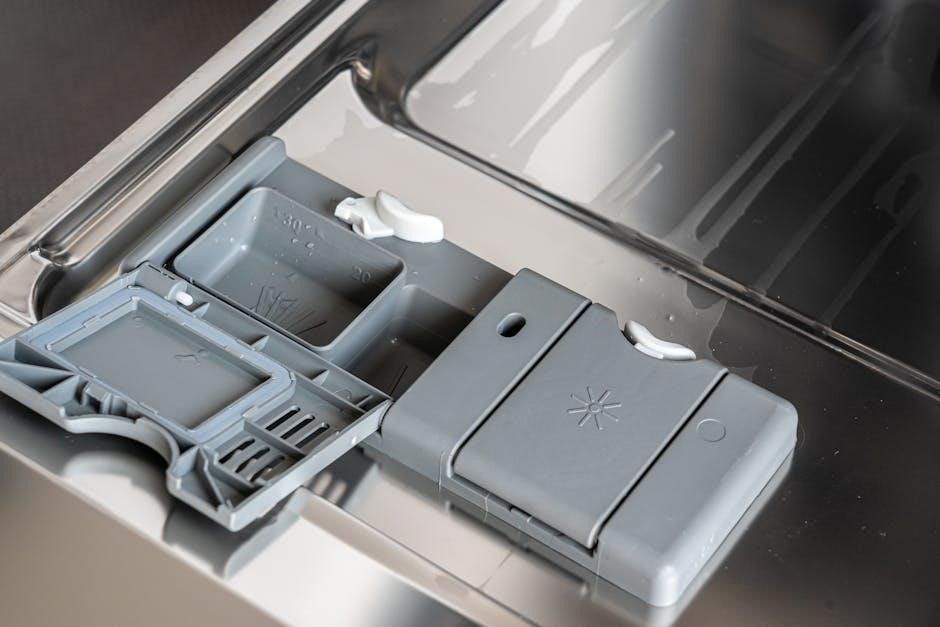
Using the correct products is crucial for optimal dishwasher performance. Always use dishwasher detergent specifically designed for automatic dishwashers; hand soap will create excessive suds. The amount of detergent needed depends on the wash program and water hardness – consult the detergent packaging for guidance.
Rinse aid assists in drying by reducing surface tension, preventing water spots and streaks. Regularly refill the rinse aid dispenser to ensure spotless results. The level can be adjusted to suit your water hardness and desired drying performance.
Special dishwasher salt is vital if your water is hard. It regenerates the water softening system, preventing limescale buildup. Fill the salt reservoir located at the bottom of the dishwasher. Regularly check the salt level and refill as needed. The Home Connect app can assist with settings. Proper use of these products extends the life of your dishwasher and guarantees sparkling clean dishes.
Wash Programs: A Detailed Overview
Your Bosch Series 2 dishwasher offers a variety of wash programs tailored to different needs. The Eco 50°C program is energy-efficient for normally soiled dishes; Auto 45-65°C automatically adjusts temperature and duration based on soiling levels, providing optimal cleaning. For heavily soiled items, use the Intensive 70°C program.
The 1-hour 65°C program delivers a quick wash for lightly soiled dishes. A Delicate program is available for fragile glassware. Utilize the Pre-rinse program to remove food residue before a full wash cycle. A Glass program is designed specifically for glassware, ensuring gentle cleaning and preventing damage.
Silent operation is possible with the Night program. Remember to select the appropriate program based on the load’s soiling level and the type of dishes. Refer to the program overview in the manual for detailed information on duration, temperature, and water consumption for each cycle.
Home Connect App Integration & Setup
The Home Connect app enhances your dishwasher experience, offering remote control and monitoring capabilities. First, ensure your dishwasher is connected to a 2.4 GHz Wi-Fi network. Download the Home Connect app from the App Store or Google Play Store and create an account.
Within the app, select “Add Appliance” and follow the on-screen instructions. Your dishwasher will need to be in pairing mode – typically activated through the dishwasher’s control panel. The app will guide you through connecting to your home Wi-Fi network. Once connected, you can remotely start or stop cycles, monitor progress, and receive notifications.
Explore features like remote diagnostics, special programs, and access to helpful tips. The app allows convenient settings and provides access to the dishwasher’s manual. Ensure your dishwasher software is up-to-date for optimal app functionality. Troubleshooting connection issues is often resolved by restarting both the dishwasher and your Wi-Fi router.
Adjusting Water Softening Settings
Proper water softening settings are crucial for optimal dishwashing performance and preventing limescale buildup. Your dishwasher requires adjustment based on your local water hardness level. To determine your water hardness, contact your local water utility or use a water hardness test kit.
Access the water softening settings through the dishwasher’s control panel – typically found within the ‘Settings’ or ‘Special Functions’ menu. The settings are usually represented by numbers or levels, corresponding to different water hardness ranges. Refer to the manual’s water hardness chart to select the appropriate setting for your area.
If you’re unsure, start with a lower setting and increase it if you notice spotting or filming on your dishes. Regularly replenish the dishwasher’s salt reservoir with special dishwasher salt, as this is essential for the water softening system to function correctly. Incorrect settings can lead to poor cleaning results or damage to the dishwasher.
Cleaning & Maintenance Procedures
Regular cleaning and maintenance are vital for ensuring the longevity and efficiency of your Bosch Series 2 dishwasher. Begin by cleaning the spray arms at least monthly, removing any food particles or debris that may clog the nozzles. Inspect and clean the filter system regularly – typically located at the bottom of the dishwasher – to prevent blockages and maintain optimal water circulation.
Periodically run an empty dishwasher cycle with a dishwasher cleaner to remove grease, limescale, and odors. Wipe down the door seals with a damp cloth to prevent leaks and maintain a tight seal. Avoid using abrasive cleaners or scouring pads, as these can damage the interior surfaces.

Check the drain hose for kinks or obstructions and ensure it’s properly connected. Exteriorly, wipe down the dishwasher’s exterior with a mild detergent and water. Following these procedures will help keep your dishwasher operating at peak performance and extend its lifespan.

Troubleshooting Common Issues
Encountering issues with your Bosch Series 2 dishwasher? Start by checking the basics: ensure the dishwasher is properly loaded, the water supply is turned on, and the drain is not blocked. If the dishwasher doesn’t start, verify the door is securely latched and the power supply is functioning correctly.
For poor cleaning performance, examine the spray arms for blockages, confirm sufficient detergent is used, and check the water temperature. Persistent odors can often be resolved by running a cleaning cycle with a dishwasher cleaner or verifying the filter is clean. If water remains at the bottom of the dishwasher, inspect the drain hose for kinks or obstructions.
Refer to the error code section for specific issues indicated by the dishwasher’s display. If problems persist, consult the full manual or contact Bosch customer support for assistance. Addressing these common issues can often restore your dishwasher to optimal operation.
Error Codes & Their Meanings
Your Bosch Series 2 dishwasher utilizes error codes to diagnose internal problems. Understanding these codes is crucial for effective troubleshooting. For example, an “E15” code typically indicates a water inlet issue – potentially a blocked water supply or faulty inlet valve. “E24” signals a drainage problem, suggesting a clogged drain hose or filter.
A frequently appearing “E09” code points to a heating element malfunction, preventing proper water heating. “F60” often relates to communication errors within the dishwasher’s control system. These codes aren’t simply random letters and numbers; they’re diagnostic tools.

Consult the complete manual for a comprehensive list of all error codes specific to your model. Note that some codes may require professional servicing. Attempting repairs based solely on error code interpretation without proper knowledge can be risky. Always prioritize safety and refer to qualified technicians when needed;
Spare Parts & Where to Find Them
Maintaining your Bosch Series 2 dishwasher sometimes requires replacing worn or damaged parts. Genuine Bosch spare parts are recommended to ensure compatibility and optimal performance. Commonly needed parts include spray arms, filters, door seals, and pump assemblies.
You can source these parts through several channels. The official Bosch website offers a dedicated spare parts section, allowing searches by model number. Authorized Bosch service centers also stock a wide range of components and can provide expert advice. Alternatively, reputable online appliance parts retailers carry Bosch spares.
When ordering, always verify the part number against your dishwasher’s model to avoid incorrect fitment. Be cautious when using third-party retailers, ensuring they offer genuine Bosch products. For complex repairs, it’s advisable to consult a qualified technician for assistance with part identification and installation.